A hernia is a common medical condition affecting people of different ages. But many individuals don’t know what a hernia truly is, how it develops, and why prompt attention is essential. You should know the basics about hernias, including the various types and their symptoms. These insights can help with early recognition and effective treatment.
What Exactly Is a Hernia?
A hernia occurs when an internal organ or tissue pushes through a weakened area or opening in the muscle or connective tissue (fascia); which normally holds it in place. This abnormal protrusion forms a noticeable lump or bulge, commonly in the abdominal region. The condition might develop gradually or suddenly, which depends on the underlying cause.
Most types of hernias are not immediately life-threatening. However, they can cause discomfort, complications, and a decline in quality of life if they are left untreated. In some circumstances, immediate medical intervention is necessary, when the hernia becomes trapped (incarcerated) or the blood supply is compromised (strangulated).
What are Common Types of Hernias?
Hernias are divided based on their anatomical location. Please look at the most prevalent types discussed below:
- Inguinal Hernia – It’s the most common type, which accounts for up to 75% of all abdominal hernias. An inguinal hernia appears in the groin area and occurs when tissue, such as part of the intestine, pushes through a weak spot in the lower abdominal wall. It’s often in the inguinal canal. Inguinal hernias are more common in men because of natural weaknesses in this region.
- Umbilical Hernia – Common among infants, but also seen in adults, an umbilical hernia develops near the belly button (navel). It happens when part of the intestine protrudes through the abdominal wall at the site of the umbilicus. Factors such as obesity, pregnancy, and previous abdominal surgery can increase the risk.
- Femoral Hernia – This type is less common, presenting as a bulge just below the groin, which is often in women. This type of hernia occurs when tissue pushes through the femoral canal, which carries blood vessels to the leg.
- Incisional Hernia – This hernia can occur at the site of a previous surgical incision in the abdomen. If the wound doesn’t heal properly or the area becomes weakened, tissues can push through and cause a bulge.
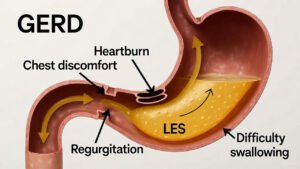
- Hiatal Hernia – Unlike the other types, a hiatal hernia causes when part of the stomach pushes upward through the diaphragm into the chest cavity. This can cause symptoms like heartburn or acid reflux.
What are the Symptoms to watch For?
Depending on the type and severity, hernia symptoms can differ. The common signs include:
- A visible lump or bulge, when standing up, coughing, or straining
- Pain, aching, or discomfort at the hernia area, which may be worse during physical activity
- A heavy or dragging sensation in the abdomen or groin area
- Weakness or pressure in the affected area
Some hernias might cause minimal symptoms and go unnoticed until they are discovered during a routine medical exam. However, it’s suggested to seek immediate medical attention if you experience severe pain, nausea, vomiting, or inability to push the hernia back in. These may indicate strangulation or incarceration.
Bottom Line
Early diagnosis and management can help you prevent complications. Whether you notice an unusual bulge or experience persistent pain in your abdomen or groin, consult a healthcare provider or hernia specialist at Crest Surgical Practice.
You should understand what a hernia is and recognize its symptoms to take proactive steps toward better health and well-being. When seeking help with incisional hernia surgery in Singapore, you should feel free to contact us today at +65 6518 4800.