Most people hope an anal fistula will go away on its own. The pain eases for a week, the discharge slows, and waiting starts feeling like a sensible plan. That hope is understandable, because nobody looks forward to surgery in such a private area.
But the wait-and-see approach often leaves the real health problem untouched. If you are wondering whether time alone can fix it, please read the following blog. You will learn how fistulas behave, what delay can cost you, and when it makes sense to speak with a specialist about anal fistulectomy in Singapore.
Why Do Most Fistulas Refuse to Close on Their Own
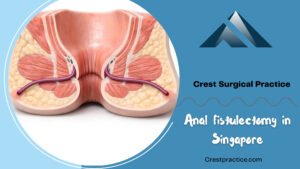
An anal fistula is a small tunnel that connects an infected gland inside the anal canal to the skin outside. It usually starts as an abscess. When that abscess drains, either by itself or through a doctor’s procedure, a channel can stay behind. Over time, the lining of that channel toughens and settles into a stable tract.
This is the reason why a fistula rarely heals unaided. Healthy tissue usually closes a wound by knitting together from the bottom up. A mature tract never behaves that way. Bowel bacteria keep entering the internal opening, so the tunnel remains open and stays infected. Every movement in the bowel exposes the channel again.
A few very early, superficial tracts do settle; when an abscess has been properly drained and cleaned. However, those cases are the exception, and a clinician can tell which group you belong to. Watching and waiting at home are unable to answer that question.
The Trap of the Quiet Spell
One misleading feature of a fistula is that it comes and goes. The outer opening can seal over for days or weeks. Pain settles, swelling drops, and it feels as though the problem has fixed.
Underneath, though, the tract is there. When the skin opening closes, pus has nowhere to escape. It absorbs again, pressure builds, and a fresh abscess forms. The abscess bursts or is drained, symptoms fade, and the cycle starts again.
You think of a blocked drain that flows freely for a moment after you pour something down it. The water moves, but the blockage stays. A quiet spell means the symptoms have paused. It does not imply the fistula has healed.
This stop-start pattern makes people postpone care again and again. Months can pass, and every flare-up quietly adds to the damage.
What Waiting Can Cost You
Delay carries natural consequences. First, repeated abscesses cause more inflammation and scarring that can create extra branches off the original tract. A fistula may be a complex one, and complex tracts are difficult to treat.
Second, a tract that runs close to the sphincter muscles becomes risky to repair as it grows complicated. Surgeons work hard to clear the infection while protecting the muscles that control continence. A more involved fistula narrows those options and increases the chance of recurrence.
Third, an untreated infection can occasionally turn serious. Fever, severe throbbing pain, and swelling that grow quickly are warning signs of a deeper abscess that needs immediate attention.
Finally, in rare cases, fistulas left untreated for many years have been connected to cancerous change. This result is uncommon, but it is a good reason not to ignore a tunnel that has been present for a long time.
Daily life suffers. Constant discharge, skin irritation, odour, and discomfort when sitting can affect your work, your sleep, and your confidence level. Living with that for months is a cost in itself.
Can Home Care Do the Job?
Warm sitz baths, careful hygiene, a fibre-rich diet, and stool softeners can make life comfortable. They can ease pain, keep the area clean, and reduce straining. Nevertheless, they manage symptoms. None of them eliminates the tunnel.
Antibiotics face the same limit. They may help control infection around an abscess, but they cannot close an established tract. It is wise to avoid squeezing or self-lancing any lump, since that can spread infection and make matters worse. Comfort measures are useful companions to treatment, not replacements for it.
How Fistula Surgery Works
Fortunately, treatment is well established, and the right approach depends on where the tract runs. A fistulotomy opens the whole tunnel so it can heal from the inside out, and it matches simple, shallow fistulas. A seton, which is a soft thread placed through the tract, keeps a complex fistula draining while inflammation settles.
For deeper tracts, ligation of the intersphincteric fistula tract, known as LIFT, ties off and removes the part of the tunnel without cutting the sphincter muscle. When earlier attempts have failed, an advancement flap uses a piece of rectal lining to cover the internal opening.
Every procedure carries some risk. Bleeding is usually mild and settles by itself. Infection can occur and might need antibiotics. Recurrence is possible, and in rare situations, damage to the sphincter can affect bowel control. An experienced surgeon compares these risks against the anatomy of your tract before recommending an option. Treating the problem early keeps more choices open.
When It Is Time to Stop Waiting
Schedule a consultation if you notice persistent or recurring discharge near the anus, a painful lump that keeps returning, skin irritation that does not clear, or an abscess that has been drained but keeps coming back.
You can seek immediate care for fever, spreading redness, or intense pain. People with inflammatory bowel conditions like Crohn’s disease should be especially proactive, since fistulas are common and complicated in that group.
A proper assessment, often a physical examination combined with imaging like an MRI, maps the tract and answers the question of whether waiting is safe.
Bottom Line –
A fistula that keeps returning is telling you something. So, you should never wait for it to become an emergency. Crest Surgical Practice surgeons can examine your condition, explain your options in plain language, and advise whether anal fistulectomy is right for you. Book your consultation for anal fistulectomy in Singapore today and enjoy lasting relief.