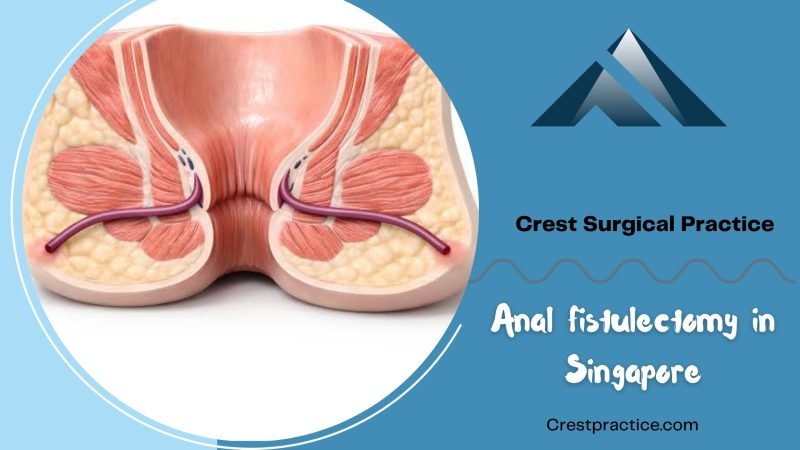
An anal fistula is a small tunnel that develops between the inside of the anal canal and the skin near the anus. It commonly presents as an anal abscess initially. While some fistulas may appear simple at first, others can become more complex depending on their location and depth.
Understanding the different types of anal fistulas may help patients recognise symptoms earlier and seek appropriate medical assessment when needed. At Crest Surgical Practice, colorectal conditions such as anal fistula, anal abscess, haemorrhoids, and colorectal disorders are evaluated and managed based on each patient’s condition.
If you are experiencing symptoms such as pain, swelling, or drainage near the anus, you may contact Crest Surgical Practice at (65) 8802 1000 for further information or appointment enquiries.
What Is an Anal Fistula?
An anal fistula usually develops when an anal abscess does not heal fully after infection. The remaining tunnel connects the infected gland inside the anus to an opening on the surrounding skin.
Some common symptoms include:
- Persistent anal pain
- Swelling near the anus
- Pus or fluid drainage
- Skin irritation
- Recurrent abscesses
- Discomfort while sitting
In some cases, symptoms may improve temporarily before returning again later. Thats why recurring anal infections should not be ignored.
Why Are There Different Types of Anal Fistulas?
Not all anal fistulas follow the same path. The classification depends on:
- The location of the fistula tract
- Whether anal muscles are involved
- How deep the tunnel extends
- Whether there are multiple branches
Understanding the fistula type helps determine the most suitable treatment approach, including whether anal fistulectomy in Singapore or other surgical procedures may be considered.
- Intersphincteric Fistula
This is one of the more commonly diagnosed types of anal fistulas.
The tunnel forms between the internal and external sphincter muscles before opening near the anus. Symptoms may include:
- Mild swelling
- Pain during bowel movements
- Persistent discharge
Intersphincteric fistulas are often considered less complex compared to deeper fistulas, although proper evaluation is still important.
- Transsphincteric Fistula
A transsphincteric fistula passes through both sphincter muscles and extends to the outer skin around the anus.
Patients may experience:
- Ongoing drainage
- Recurrent abscess formation
- Deeper discomfort
- Tenderness around the area
Because the tract involves anal muscles, treatment planning needs to carefully balance fistula removal while preserving bowel control.
- Suprasphincteric Fistula
This type travels upward above the sphincter muscles before descending again toward the skin opening.
Although less common, suprasphincteric fistulas may be associated with:
- More extensive infection
- Complex branching tracts
- Repeated inflammation
Imaging studies may sometimes be used to better understand the fistula pathway before treatment is planned.
- Extrasphincteric Fistula
Extrasphincteric fistulas are relatively uncommon and may involve a tract that bypasses the sphincter muscles entirely.
These fistulas can be more complicated to manage because of their location and surrounding tissue involvement.
Simple vs Complex Anal Fistulas
Anal fistulas are also broadly grouped into:
Simple fistulas and Complex fistulas
Simple Fistulas
Usually involve:
- A single tract
- Limited muscle involvement
- Lower risk of recurrence
Complex Fistulas
May involve:
- Multiple branches
- Significant muscle involvement
- Recurring infections
- Previous failed treatments
Complex fistulas often require more detailed surgical planning and follow-up care.
How Are Anal Fistulas Diagnosed?
Diagnosis usually begins with a physical examination and discussion of symptoms.
Additional assessment may sometimes include:
- Anoscopy
- Imaging studies
- MRI scans
- Examination under anaesthesia
These evaluations help determine:
- The fistula type
- The location of the tract
- Whether infection is still present
Accurate diagnosis is important before deciding on treatment options.
Treatment Options for Anal Fistulas
Treatment depends on the fistula’s complexity, location, and involvement of surrounding muscles.
Possible treatment approaches may include:
- Drainage procedures
- Seton placement
- Fistulotomy
- Anal fistulectomy
- Other colorectal surgical procedures
Anal fistulectomy in Singapore may be considered in selected cases where removal of the fistula tract is appropriate.
At Crest Surgical Practice, colorectal services include evaluation and management of anal fistulas, anal abscesses, haemorrhoids, colorectal conditions, and endoscopic procedures.
Can an Anal Fistula Heal Without Treatment?
In most cases, anal fistulas do not heal completely on their own because the abnormal tunnel remains beneath the skin.
Without proper management, some patients may experience:
- Recurring abscesses
- Persistent drainage
- Ongoing discomfort
- Skin irritation
Early medical assessment may help reduce the risk of repeated infections and complications.
Recovery After Anal Fistula Surgery
Recovery varies depending on:
- The fistula type
- The extent of surgery
- Individual healing response
Some patients may notice:
- Mild discomfort for several days
- Temporary drainage
- Fatigue after the procedure
Doctors may also advise:
- Warm sitz baths
- Good hygiene practices
- Adequate hydration
- A fibre-rich diet
Follow-up visits are important to monitor healing progress properly.
Understanding the Condition May Help Patients Seek Care Earlier
Anal fistulas can vary significantly in complexity, symptoms, and treatment approach. Some may remain relatively straightforward, while others involve deeper tracts and recurring infection.
Recognising symptoms early and understanding the different fistula types may help patients seek appropriate assessment before the condition worsens over time.
For enquiries regarding anal fistula symptoms, colorectal assessment, or anal fistulectomy in Singapore, you may contact Crest Surgical Practice at (65) 8802 1000 for further information.